Showing posts with label Cornish recognition. Show all posts

Tuesday, 29 April 2014

Cornish history must now be taught in Cornish schools

Following on from the Cornish recogntion in the Framework Convention for the Protection of National Minorities (FCNM) the Cornish school curriculum must be changed. Perhaps to the extent of a Cornish National Curriculum, now I don't mean science should be the prism of Cornish scientists and lessons revolving around Davy, Trevithick and Couch Adams, or literature be dominated by Du Maurier, Quiller-Couch and Golding. But nevertheless Cornish inclusion in the Framework binds education authorities to change things and these changes are significant.

Unlike some of the subjects I wrote about yesterday, that perhaps the convention might mean this or that, in terms of education it's very clear, Article 12 is categorical:

"Article 12
The Parties shall, where appropriate, take measures in the fields of education and research to foster knowledge of the culture, history, language and religion of their national minorities and of the majority.
In this context the Parties shall inter alia provide adequate opportunities for teacher training and access to textbooks, and facilitate contacts among students and teachers of different communities.
The Parties undertake to promote equal opportunities for access to education at all levels for persons belonging to national minorities."

Link

I do think Cornish education has come on a great deal since I was in school. There have been changes and local history has a much more prominent place. Which I think is greatly beneficial, because the history of your community has more bearing on where you live, why culture and festivals are the way they are and of course why the economy is the way it is.

Where does the Cornish story in history fit in to the history of England? well it doesn't fit in that well. This is one of the reasons we are different. The history of the English people, begins with the Anglo Saxon invasions, the formation of a unified kingdom from the seven kingdoms that were, before England ever existed. Various battles with the Vikings and the Danelaw. At this time the Cornish were already resident in Britain and descend from the ancient Britons of course the stories intertwine but there are different dynamics. For the English this was the founding moment in the history, their Plymouth Rock if you will, but for the Celts like the Cornish this was a much different story, one of invasion and the loss of traditional lands, Plymouth Rock was taken from us.

Even further back in Roman times, Cornwall was at the very periphery and traces of the Romans West of the Tamar and indeed West of Exeter are very few and far between. Whereas what is now England was heavily influenced by the Romans, forts and roads etc the same is not perhaps true in Cornwall. These are the kind of things that the teaching of history in Cornwall needs to address to be complaint with the FCNM.

But the FCNM means that history has to be taught differently and indeed subjects have to include Cornish beyond history. Explicitly stated is culture, language and religion as well. It remains to be seen how this might fit in. It seems to me Religious Education should include the reformation in Cornwall and it's negative effect on Kernewek. The later non conformist denominations. Language is of course the big issue, perhaps we might see the Cornish GCSE reinstated and the language offered as an option alongside French, German and Spanish.
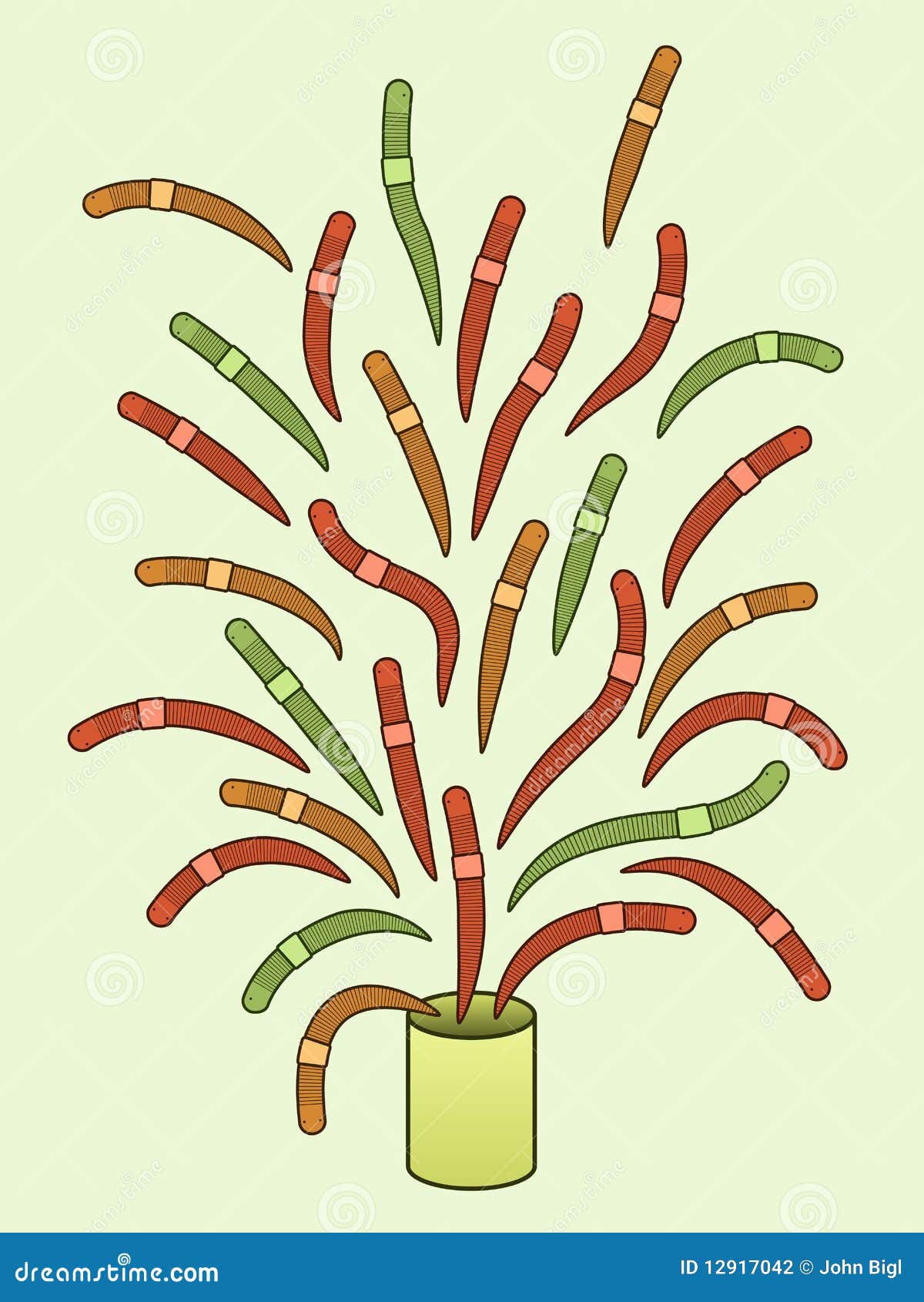
Many have dismissed the recognition of the Cornish as tokenism an empty gesture. But these are the kinds of people that really need to have a good look at the Convention and what it actually entails. As I wrote yesterday perhaps for the first time the Cornish will receive protections under the Equality Act, perhaps housing policies will have to change and access to Cornish language media. The point of this blog was to highlight some of the aspects of history and how education now needs to change to incorporate the Cornish story into teaching. It wasn't meant as a definitive guide to Cornish history, I didn't even touch upon the industrial revolution in Cornwall, the governmental arrangements of the Stannary Parliament and the Duchy, the rebellions of 1497 and 1549 or even Cornwall's unique part in the 'English' Civil War. There are huge ramifications just for the subject of teaching history, what will or won't be included. How much of Cornish history is needed  "to foster knowledge" of the national minority? This seems like the perfect opportunity for education matters to be devolved to Cornwall. My view is that recognition under the FCNM is a long drawn out and hard fought victory. It is historic and momentous in itself but it can promise so much more. There sits before us a can of worms, with hard work the lid has already been forced off, with more hard work we can pick up this can turn it upside down give it a good shake and get the most out of this for Cornwall as possible.


As a footnote it's also worth considering other mentions of education in the Convention:


"Article 13
Within the framework of their education systems, the Parties shall recognise that persons belonging to a national minority have the right to set up and to manage their own private educational and training establishments.
The exercise of this right shall not entail any financial obligation for the Parties."

"Article 14
The Parties undertake to recognise that every person belonging to a national minority has the right to learn his or her minority language.
In areas inhabited by persons belonging to national minorities traditionally or in substantial numbers, if there is sufficient demand, the Parties shall endeavour to ensure, as far as possible and within the framework of their education systems, that persons belonging to those minorities have adequate opportunities for being taught the minority language or for receiving instruction in this language.
Paragraph 2 of this article shall be implemented without prejudice to the learning of the official language or the teaching in this language."

Monday, 28 April 2014

Cornish recognition what it means? some thoughts

I'm no legal expert and this early days for Cornish recognition for the Framework Convention for the Protection of National Minorities, so this is more of a discussion piece than a definitive account of what this historic decision means. Take a pinch of salt where necessary add a comment where you wish but these are my thoughts on what it means. There are a number of discussions at the moment taking place and I'm not going to try to summarise them all. But here I'll take a quick look at what the Framework means, what it means for equality legislation and what changes might occour now.

Of course I must echo Mebyon Kernow leader Dick Cole in saying this is fantastic news, but I also agree with Andrew Long when he said:

‘It is excellent news Government are finally recognising something the European Union have recognised for years and the Cornish have known for generations.’
On the Cornish Times website.

What is the Framework Convention?:

Fantastic, historic, momentous, groundbreaking there are certainly a plethora of positive descriptions that could be given. But what is the Framework Convention for the Protection of National Minorities? In short it's an agreement between the states of Europe to protect identities of peoples in the aim of creating and ensuring harmony. As the preamble explains:

"Considering that the upheavals of European history have shown that the protection of national minorities is essential to stability, democratic security and peace in this continent;

Considering that a pluralist and genuinely democratic society should not only respect the ethnic, cultural, linguistic and religious identity of each person belonging to a national minority, but also create appropriate conditions enabling them to express, preserve and develop this identity;

Considering that the creation of a climate of tolerance and dialogue is necessary to enable cultural diversity to be a source and a factor, not of division, but of enrichment for each society;"

link


This is not something emanating from the European Union, it is from the Council of Europe and it is up to members of the council to decide whether to implement it. This map from wikipedia goes some way to illustrating how the Framework stands across Europe:


European states that aren't members of the EU (e.g. Switzerland) are signatories, other EU members like France ignore it completely. It is at the behest of state governments to implement this and to define groups individual governments consider a national minority. This is why so much lobbying for Cornish recognition has taken place over the years and finally and thankfully Westminster has relented. In short this is a multilateral treaty that seeks equality and protection of identities of cultures between national majorities (such as the English) and national minorities (such as the Cornish) specifically duties of the state to ensure this. 


How might it apply to Kernewek and broadcasting?:

So what does this specifically mean? In my opinion parts of the Convention are quite woolly and open to interpretation. Such as the first paragraph of Article 9:

"The Parties undertake to recognise that the right to freedom of expression of every person belonging to a national minority includes freedom to hold opinions and to receive and impart information and ideas in the minority language, without interference by public authorities and regardless of frontiers. The Parties shall ensure, within the framework of their legal systems, that persons belonging to a national minority are not discriminated against in their access to the media."

What could this mean? and what limits might "within the framework of their legal systems" actually entail? We could read this and argue that the present form of broadcasting is sufficient "access" or we might argue that "access" requires Cornish language tv, radio and print media. It could also be argued that media is the preserve of the private sector and not the state and it is up to private enterprise, not the government to ensure "access". Although considering the UK has a state media in the BBC and statutory requirements with independent broadcasters are in place, it would be within the power of government to allow access to our minority language. 

What about housing policy?

There's an interesting debate about how the Convention affects Cornwall Council/ government housing policy specifically the local plan. Bernard Deacon has made the argument here that a housing policy predicated on an increased migration to Cornwall (from England) infringes the convention and specifically Article 16:

"The Parties shall refrain from measures which alter the proportions of the population in areas inhabited by persons belonging to national minorities."

The local plan explains that migration to Cornwall is a factor in increasing the house building rate to 2020 so does it therefore follow that the state is infringing article 16? 

Do other rights and protections now follow?:

Although the convention was ratified by the UK government in 1998, since then and until the Cornish have been excluded from it. However other groups were included in it. Most notably the Welsh, Scottish, Ulster-Scots, Gypsy and Irish traveller. Because the government took the view that groups native -if you will- to the UK that had been recognised under the Race Relations Act 1976 where covered by the convention. The Labour government's argument for denying the Cornish was that there had not been a case tried at court that had shown the Cornish to be defined as a 'national' or 'racial' group. So rather than challenging the arguments put to them that the Cornish fit the criteria as a nation (flag, common history, self identification, common geographical origin, language, culture etc). They left it up to the courts to decide, the story of John Angarrack's brave effort to do this and the Cornish Fighting Fund is summarised here. 

Other than a dig at Labour and their scornful attitude to Cornish identity and recognition, there is a point I am getting to here. If it follows that the same groups recognised as National Minorities are recognised in anti discrimination legislation such as the Race Relations Act, is the converse true do the Cornish now enjoy the protection of this legislation? Could prosecutions be made in cases where Cornish people are discriminated against and vice versa in cases of Cornish people discriminating against the English? Surely now not only the Race Relations Act but also the Equality Act 2010 ensure protections of the Cornish people. If the government denies this then surely they have broken articles of the Framework Convention? This point is significant because it seems the Convention applies to protections to a people, their culture and identity from the policies and acts of the state. Whereas the Equality act and Race Relations act provide protection against discrimination from individuals and organisations.  

On the subject of housing, remember the case in Illogan, whereby a locals were refused housing in the village because they were not from London (Scandal of Cornish homes for Londoners). Could the Equality Act be used here?

The Cornish should now get a tickbox in the census:

The last point I want to make here is on the census, hitherto the Cornish have been able to record that identity on the census but with a write in option rather than a tick box. In the 2011 census all national minorities recognised under the Framework Convention had a dedicated tickbox with their identity written beside. Cornish was the only national minority group recorded but not explicitly written on the form. My reading of Article 4 is quite clear:

"The Parties undertake to guarantee to persons belonging to national minorities the right of equality before the law and of equal protection of the law. In this respect, any discrimination based on belonging to a national minority shall be prohibited."
I don't see how the government (this or the next) can discriminate against the Cornish by not including a tickbox and denying our identity equal footing with English, Irish, Scottish, Welsh etc. Further there are many organisations that collect data on ethnic and national origins, some do already collect Cornish and some don't. It would now seem the all have to collect Cornish and allow it to be displayed to users on an equal footing with other identities.

Conclusion:

The real effects of the recognition of Cornish national identity are yet to be known. Most of this will be a legal process. I would very much expect some of the issues and arguments I have touched upon here to be debated and perhaps tested in the legal system. I apologise for the rambling nature of the above blog and how it flits between subjects. But this is an issue with huge ramifications, this is a 'game-changer' and there ought to be a very real debate on how this all applies. I imagine there are a number of organisations governmental, councils, businesses, housing associations that will have to think how their existing equality policies now apply with respect of the Cornish. I'll leave you with one last thought: we may have laughed (or tried to) at the BBC programme W1A and the fictional Spotlight news presenter overlooked for promotion in the BBC because she was Cornish, but that fictional case might soon be impossible in reality or challenged in the courts....

A couple of articles have caught my eye on this subject of Cornish recognition:

Cornwall to join UEFA? (or indeed field a '7 Nations' rugby team? Commonwealth games?)