Showing posts with label no to nuclear. Show all posts

Sunday, 12 June 2011

When's the deadline? Solar farms, Cornwall and the FIT review

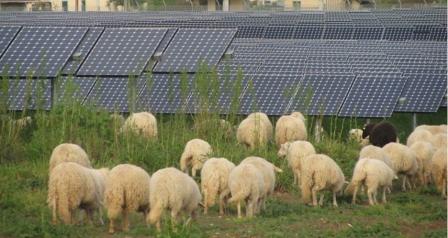
photo from Business Cornwall website

I couple of articles about solar power have come to my attention since writing: Solar Farms why the government should be investing. They both concern Cornwall directly, the first comes from Andrew Wallis (the Independent councillor and implacable critic of Cornwall Council) which raise doubts that the planned solar farm by Cornwall Council will have to be abandoned due to the funding review. Andrew's blog is here: Solar Farm Gold Rush Over. The funding review of the Feed in Tariff certainly was a kick in the teeth for the Conservative- Independent coalition at County Hall as they had a lot riding on the old preferential rate as an old press release for the council explains: Cornwall Council prepares for £1 billion solar power gold rush. As Councillor Wallis rightly points out any Solar Farms will have to be set up and plugged into the grid by the first of August, which is really not long and Cornwall Council face abandoning the scheme after lots of work.

Which brings me to the other article, which is a news item by local PR firm Deborah Clark Associates; Solar Companies Granted Judicial Review, which explains that lots of companies have combined together to challenge the government's policy in court. It must be said that whatever side of the argument you are on for or against subsidy, it is a very shabby way to do business by the government. Quite why companies and organisations such as Cornwall Council were not given ample time to finish planned solar farms is outrageous. For a government supposedly committed to encouraging business, attitudes like this raise serious questions.

Anyway I digress, will we have the solar farms in Cornwall and elsewhere? it seems a little early to tell whether the Judicial Review might be successful and grant firms an extension of the subsidy or force the government to reconsider the whole thing.

On the subject of solar farms I must say that I am not supportive of them without condition and I share the concerns of Andrew Wallis about using agricultural land. (I have the same concerns about large scale house building on green field sites in Cornwall). However, it should be noted however that the Wheal Jane site where the council plan to build the solar farm is not farmland and is a disused tin mine. In cases like this where the visual impact is lessened by hills, valleys and trees and the land is not fit for farming or much else, these would have been (or might be if the government sees sense) the most suitable sites for medium and large scale solar developments
Generally on the subject of supplying energy for the future, we have to ask ourselves would we rather live next to a wind farm or a solar farm or a nuclear power station or a coal fired power station?
Would we rather our energy came from dangerous nuclear plants and the associated problems of spent fuel rods and nuclear waste?
Will we continue to rely upon fossil fuels which are a finite resource with year on year rising costs?
On the subject of subsidies we might ask why the government is subsidising nuclear energy and not renewable energy, it's clear the subsidy is not the issue. The government favours nuclear power.

Tuesday, 24 May 2011

Solar Farms: why the government should be investing not reducing the feed in tarriff

Recently the coalition government has cut the favourable feed in tariffs for planned solar energy farms, this has had a great effect on Cornwall where many were planned. Cornwall Council (on the 16/5/2011) has written to the government in response to this act. I wholeheartedly agree with the council on this issue, the government should be investing in developing renewable energy and here's some of my reasons why.

Cornwall is land well known for innovation in the sciences and technology, Humphry Davy, Dick Trevithick, John Couch Adams, Henry Trengrouse to name but a few. It is something of great pride to Cornish people that we are vastly overrepresented in terms of our contributions to knowledge in comparison to our size. In this vein, it was with great pride and wonder as a boy to see on the television news of the construction of the UK's first wind farms at Delabole in 1991. It was exciting that something new was being tried, that envelopes were being pushed and new opportunities were emerging.


With a similar mind I had looked forward too the construction of solar farms in Cornwall. The United Kingdom has been extremely tardy in developing this technology and lags seriously behind the likes of Spain, China, Germany, France, the Czech Republic and Canada. (Although there has been investment in other renewable sources of energy, here in Kernow for example Wave Hub in Hayle and Geo Thermal in Redruth.)

Here in Cornwall as elsewhere plans to build solar farms had their feet knocked out from them when the Government announced that the feed in tariff rates were being cut as part of the austerity measures. There is some controversy about the old preferential tariffs, which effectively meant that the government were subsiding solar energy plants. It should be noted that the subsidy still applies to small scale solar panelling such as on houses, but has been cut for the larger 'solar farms'. Although we must be very critical of government spending  and subsidies in this time of economic uncertainty and spending cuts. We should not lose sight of the very real need to develop alternative energy sources at a time when electricity production relies upon finite resources of fossil fuels.

There is a pressing need to nurture, develop and support renewable energy for the future. We face a time when oil and gas prices are rising and where Britain in general and Cornwall in particular is reliant upon importing energy from elsewhere. We have natural resources like abundant sunshine, it is there all the time a latent energy and economic resource just waiting to be tapped into. It is foolish that we do not make more of this.


Image taken from http://www.investincornwall.com/key-business-sectors/environmental-renewable-energy/solar/

Sure enough solar panels are not wholly profitable which is why they were subsidised. But this need not be the case, with investment of public money then the technology can be developed further. Firstly this will allow more trials of solar panels which will iron out problems and over time will evolve the technology to becoming more efficient and productive. Secondly the production of more and more solar panels will benefit from the economies of scale meaning that construction costs and thus purchase of this technology will be cheaper. In much the same way as coal fired and nuclear power stations required lots of investment initially to make them profitable the same is true of new technologies.

With the proper investment, places like Cornwall could make great profits from renewable energy. Becoming more self sufficient for energy needs and possibly exporting electricity to the national grid. Renewable energy is one of the options available at this critical juncture and although it needs considerable development and investment so too would the other alternative: nuclear energy. Fukushima has brought home to the world that nuclear energy is very volatile and very dangerous. And in definite need of investment itself.


The government despite rhetorically being the greenest ever, truly is not, they seem uncommitted to investing in renewable power. A fact that is no doubt hitting home in the Clay Country where the government and the leader of Cornwall Council Alec Robertson are forcing a waste incinerator on the people there and making a mockery of their own claims to being green. Any hope that waste management would rely upon pushing up recycling in Cornwall, large scale food waste bio digestion or even composting are dashed as it would be much easier for Robertson and Pickles that our waste was simply burned.

There is a lot more detail in the Cornwall Council press release of particular interest is the detailed open statement from Councillor Julian German, which outlines in detail the reasons why the end of the preferential feed in tariff is unwelcome. A very good read.